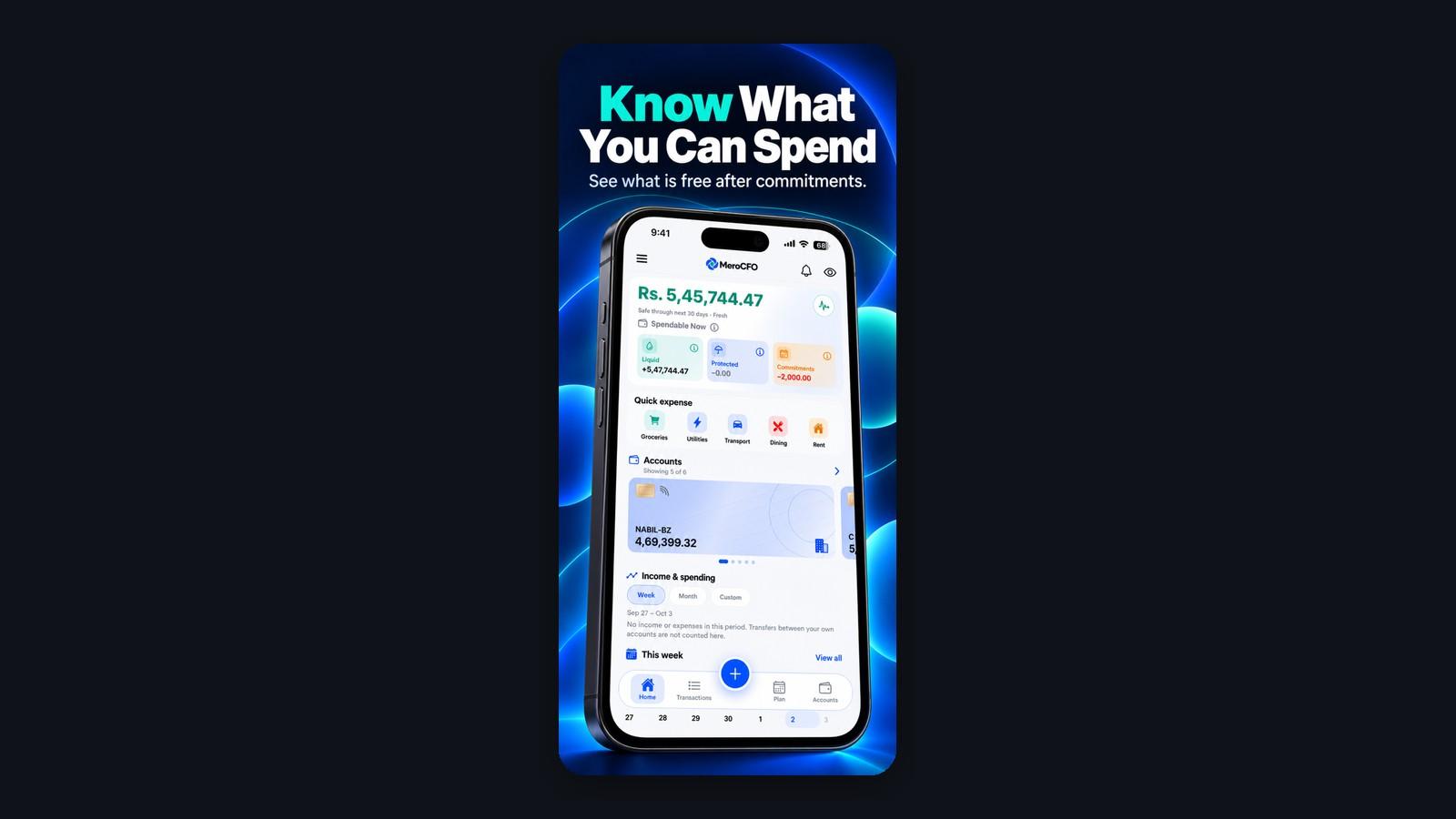
Notes and Excel never answer "what can I spend?"
Money sits in cash, wallets and bank accounts, plus what people owe you and what you owe.
01The question that wouldn't go away
After Dashain, the house was still in that soft, slightly tired mood — visitors gone, leftover sweets, and a quieter question at the table. Money was in too many places: cash in a drawer, an eSewa balance, a bank account, a bit we had already set aside, and money a cousin still needed to return. Someone asked, not dramatically, whether we could actually spend on a small trip or whether that would be foolish. We opened notes. We opened a spreadsheet. We added things up. We still did not have an honest answer. The totals were not the same as what was safe to touch.
That is a very Nepali shape of money: cash, wallets, banks, informal loans, and a few things you must not spend. Western "connect your bank" apps do not start there, and I did not want to hand a household ledger to a server just to find out.
02What I tried
I already knew expense diaries. They tell you where the money went. They do not tell you what you can use today. So I started a phone app around one number: Spendable Now — after real pockets, debts, and money you have parked. The journal lives on the device, in a local database. You add things by hand on purpose. There is no bank login in this version. Confirm before an entry sticks. If you remove something, it is reversed, not quietly erased.
03What it does now
MeroCFO is in beta. It brings cash, wallets, banks, what you have borrowed or lent, and reserves into one place, and it shows that single spendable figure. Sign-in is for you, not for uploading the books. The ledger stays on the phone. I am careful not to promise cloud magic that is not there yet.
04What I learned
Net worth can make you feel rich and still leave you short on Tuesday. The useful number is the quieter one: what you can use, and what you should not touch.