Customers bring photos and videos on their phones.
Studios collect them by cable, chat apps or cloud links that shrink the quality.
01How it started
A cousin was getting married, and we spent an afternoon at a photo studio going through pictures people already had on their phones — guests, the couple, a few clips from the evening. The studio's options were a cable that never quite fitted the next phone, a "just WhatsApp it, hai" that quietly crushed the quality, or a cloud link that did the same thing and also sent the wedding off the premises. Nobody was being difficult. There was just no good way to move a lot of full-size files from a pocket to the studio computer.
A friend who has watched this happen more than once asked, over that same stretch of holiday: what if the studio laptop simply became the place the files go? Same Wi-Fi, no app to install, no account, and nothing uploaded to someone else's server.
02Building it
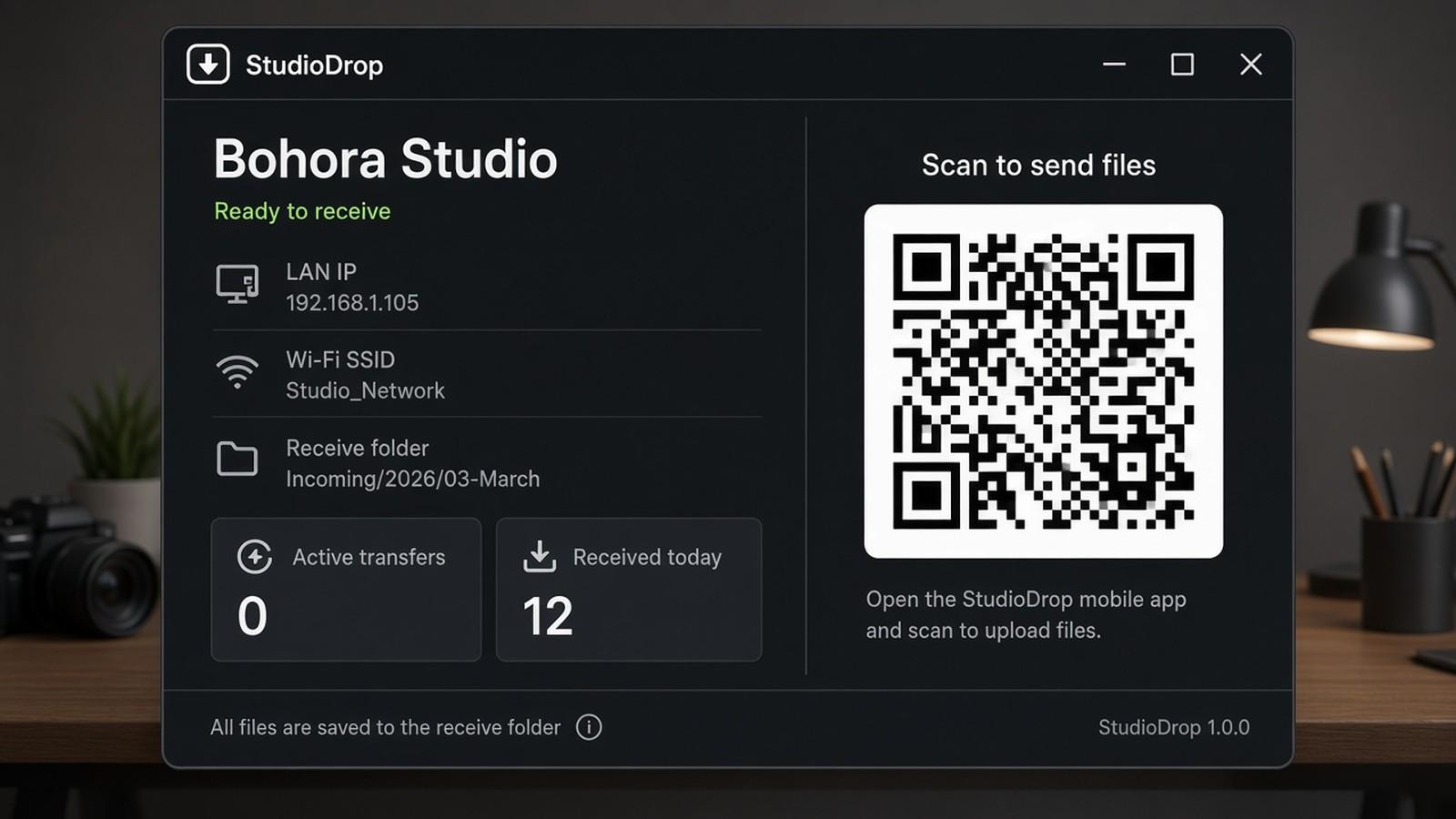
That constraint shaped everything. StudioDrop is a desktop app. It starts a local server on the studio machine, shows a QR, and the customer's phone — once it is already on the studio Wi-Fi — opens a page in the browser. They type a name, maybe a mobile or a reference number, pick the files, and send. If the connection drops, the transfer can resume from the chunks that already arrived. The customer never chooses a folder. The app files things by date, a unique submission ID, and the name, so two people called the same thing do not overwrite each other.
One thing I had to keep saying out loud: scanning the QR does not join the Wi-Fi. The phone has to be on the studio network first, or the page will not reach the laptop.
03What it does now
It is still in build. The receiving station runs on the studio computer. No customer app store listing, no cloud relay, no CRM login just to hand over photos. A second studio should be able to set their own name and storage path and use the same app.
04A note I keep
Wedding files are not "content." If they never need to leave the room to get from a phone to a disk, they shouldn't.